
Gas sensors and respiration analysis: what compromise?

Analyzing gas exchange – VO₂, VCO₂, ventilation – is now the gold standard for understanding exercise physiology, determining ventilatory thresholds, and personalizing training. However, the market offers highly contrasting technological approaches: on the one hand, cumbersome, complex, expensive, but extremely precise systems; on the other, much more affordable and simpler devices, but with limited accuracy.
This article discusses data quality, trade-offs, and why PAIRFS decided to invest in developing a unique gas sensor technology. The following questions are therefore raised:
With chemical sensors, without calibration, without consumables, how inaccurate is a measurement with commercially available sensors?
To accurately measure VO2, what level of measurement accuracy is required?
In this post, we compare the measurement uncertainty in simple systems and the expected accuracy, to explain why at PAIRFS, we invest in our own gas sensors.
The accuracy of commercially available gas sensors in simple and portable devices – the parallel with the breathalyzer
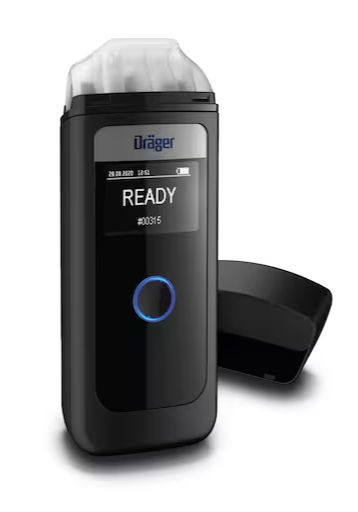
Simple measurement systems use chemical sensors, without moisture suppression or calibration with gas cylinders.
While these systems have received little attention for CO2 or O2, they have been extensively studied for ethanol and breathalyzers. And since they use the same gas sensor technologies, they face the same problems. These systems only measure the concentration of ethanol in exhaled air, based on a single breath.
The most efficient systems, tested and certified by reference organizations such as the LNE in France , are reliable in use to +/- 7.5% (international standard e OIML R126 ). This relative accuracy, expressed as a percentage, is common to all similar technologies, therefore to O2 and CO2.
We can therefore assume that simple, inexpensive systems, without calibration, without humidity suppression, have - at best - a measurement accuracy of +/-7.5% on oxygen and CO2 concentrations in exhaled and inhaled air.
How accurate is a VO2Max measurement for positioning an athlete?
To measure the precise level required for physiological measurement, let's consider the case of VO2Max with the goal of positioning an athlete relative to others. This case is the most favorable because:
Since we are talking about a maximum value, it is for this value that the measurement range is the greatest.
Since we are talking about positioning within the population, this is also where the range of variation is greatest.
The case studied is therefore the most favorable. If we were to consider the case of monitoring an athlete who is training and progressing, the ranges of variation are more limited.
What is the range of variation of VO2Max?
If we take the data from the Wikipedia page on VO2Max , and the case of athletes between 20 and 29 years old, in running, 10% of the population have a VO2Max below 28.6 mL/(kg·min), 90% a value below 58.6 mL/(kg·min) and on average a value of 46.5 mL/(kg·min).
The measurement range is therefore between -46% and +24% of 46.5 mL/(kg·min).
What is the measurement error with commercially available sensors used simply for VO2Max measurement?
VO2 is not just a measure of concentration. VO2 is the amount of oxygen consumed by a person. It depends on the volume of air inhaled and the oxygen concentration in that volume, and on the volume of air exhaled and the oxygen concentration in that volume.
Measuring inspired volume is very imprecise (if accurate measurement of exhaled volume is desired – the sensor is not symmetrical). Reference systems use the Haldane formula to calculate VO2, which depends on exhaled volume and the oxygen and CO2 concentrations in inspired and exhaled air ( https://theses.hal.science/tel-03986875/document ). - p54).
If we assume that we have +/- 7.5% on the exhaled CO2 and O2 measurements, a little imprecision on the exhaled volume and the inspired concentrations of CO2 and O2, the measurement accuracy of VO2Max is approximately +/-20%.
For VO2Max measurement, in absolute terms, the measurement error covers almost the entire measurement range.
Democratizing the measurement of respiratory gases for sports, health, and well-being is simply not possible with commercially available gas sensors. This is the problem PAIRFS addresses by developing its own gas sensor technology.
The measurement is not good, but is it reproducible?
An invalid absolute measurement isn't necessarily a problem if it's reproducible. However, it can still be used to track progress. Let's look at what can influence the measurement of VO2 during exercise (running economy):
The athlete's progress, of course, is what is sought.
But also:
The sensor's condition at the time of measurement: it is generally advisable to let the sensor warm up for 30 minutes before taking the measurement. It needs to acclimatize.
Sensor age: A chemical sensor uses a reagent that is consumed upon contact with oxygen. Therefore, unless the sensor is placed under vacuum, it loses sensitivity even when not in use. This is why it must be changed regularly. It must also be recalibrated using gas cylinders.
Humidity in exhaled air: whether or not the athlete drinks before the measurement will influence it.
The measurement conditions (room temperature and humidity, outdoor wind). Moreover, even the reference systems used in laboratories do not function under certain conditions (very humid air in particular).
So if the measure changes, that might be the first point, maybe not....
PAIRFS leverages over 15 years of R&D on gas sensors within the Grenoble ecosystem to develop a unique technology adapted for respiration and portable systems. PAIRFS holds a portfolio of 11 patents on its technology, giving it a significant advantage and technological lead over all market players.


Comments